You listed your home expecting offers. Instead, you got silence — or worse, lowball offers and vague feedback from showings that go nowhere. If you're sitting there thinking "I can't sell my house," I want you to know two things: you're not alone, and you're probably not stuck. You just need a different approach.
I've been selling real estate in Los Angeles for nearly a decade. I've closed over 500 transactions totaling more than $500 million in sales. And some of the most rewarding deals of my career were homes that other agents couldn't sell — homes where the owners were frustrated, losing sleep, and ready to give up. In almost every case, the problem wasn't the house. It was the strategy.
First, understand where the LA market actually is right now.
Los Angeles is not one market — it's dozens. What's happening in Encino is completely different from what's happening in Silver Lake, which is completely different from what's happening in Malibu. A home that would sell in two weeks in one neighborhood might sit for three months in another, even at a similar price point.
That's why blanket advice like "just lower your price" or "the market is slow right now" is almost never the full picture. Yes, interest rates have shifted buyer behavior. Yes, inventory has changed. But homes are still selling — every single day — in every neighborhood across LA. The question isn't whether homes are selling. It's whether yours is positioned to be one of them.
If your home has been on the market for more than 30 days without a serious offer, something specific is off. Let's talk about what that might be.
The pricing conversation nobody wants to have.
I know you've heard this before. But I'm going to say it differently: the market doesn't care what you paid for your home, what you put into it, or what your neighbor's house sold for two years ago. The market cares about what a qualified buyer is willing to pay today, in this interest rate environment, in this specific neighborhood, for a home in this specific condition.
If your home is priced even 5–8% above where it should be, most buyers won't even come see it. They'll scroll right past it online. And every week it sits, the listing gets staler. Agents start wondering what's wrong with it. Buyers assume there's a catch. The longer it sits, the less leverage you have.
The fix isn't always a dramatic price cut. Sometimes it's a modest adjustment paired with a relaunch — new photos, new marketing, fresh eyes on the listing. But the conversation has to start with honest numbers.
Your home might not be showing the way it should.
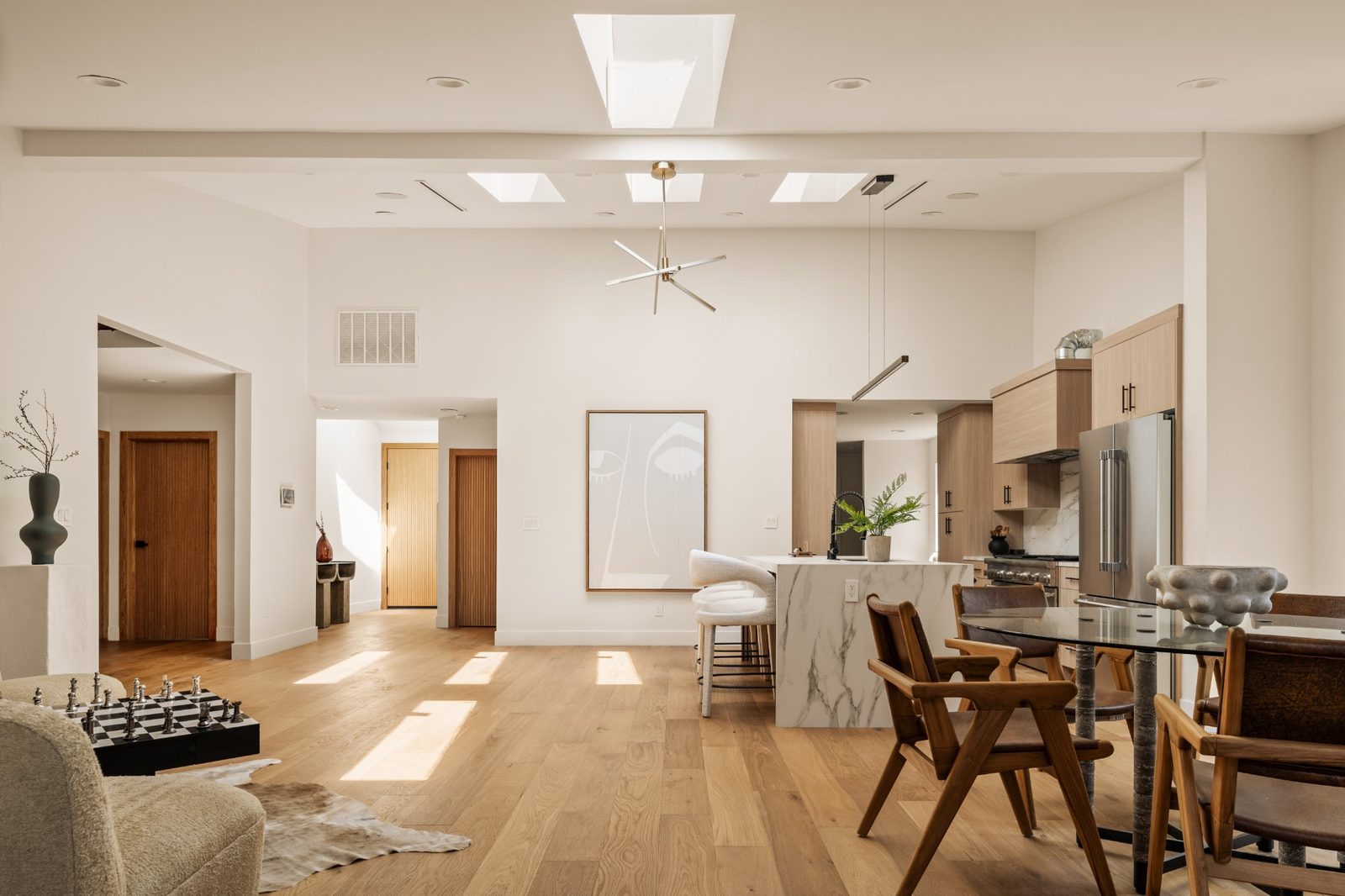
In LA, presentation isn't a nice-to-have. It's the price of entry. Buyers here are scrolling through hundreds of listings on their phones, and the first photo is your one shot to get them through the door. If your listing photos are dark, cluttered, or shot on a phone — you've already lost.
Professional staging, professional photography, and a home that's been prepped to show its best — these aren't luxuries. They're the baseline. I've seen homes go from zero showings to multiple offers just by restaging and reshooting. The house didn't change. The presentation did.
Walk through your home with fresh eyes. Better yet, have someone who doesn't live there walk through it. Is there deferred maintenance that's scaring buyers off? Are the rooms reading smaller than they should because of furniture? Does the curb appeal invite people in or make them hesitate? These details matter more than most sellers realize.
Your marketing might be the problem — not your home.
Here's something a lot of sellers don't think about: just because your home is "on the market" doesn't mean anyone is actually seeing it. Throwing a listing on the MLS and waiting is not marketing. It's hoping.
Real marketing means a compelling listing description that tells a story — not a list of features. It means targeted digital campaigns reaching buyers who are actively searching in your neighborhood and price range. It means broker outreach — personally calling and emailing agents who have buyers looking for exactly what you're offering. It means social media exposure that goes beyond posting a link on Instagram.
When we take on a listing at the Stewart Team, we build a custom marketing plan for every property. We know that the right buyer for your home might not be casually browsing Zillow. They might be relocating from out of state. They might be an investor. They might be working with an agent in a completely different part of the city who hasn't even thought to search your neighborhood yet. Our job is to find those buyers and put your home in front of them.
The right agent has a network that works for you.
This is the piece that gets overlooked most often, and it might be the most important one. When you work with an agent who has deep relationships across the LA market — with other agents, with buyers, with developers, with investors — your home gets exposure that no amount of online advertising can replicate.
At Resident Group, we're not a solo operation. We're a collective of top-producing agents who share information, share buyer pools, and collaborate on deals. When I take a listing, it doesn't just go to my network. It goes to the entire Resident network — agents who are actively working with qualified buyers looking for homes right now. That's an immediate audience of serious, motivated buyers that most agents simply don't have access to.
The difference between a home that sits and a home that sells often comes down to who knows about it.
I've sold homes in the first week because I knew — personally — an agent who had a buyer looking for exactly that type of property in exactly that neighborhood. That's not luck. That's what happens when you've spent years building relationships and you work within a brokerage that prioritizes collaboration over competition.
Sometimes the issue is your current agent.
This is a hard thing to hear, but it's worth saying: not every agent is the right fit for every listing. If your agent isn't communicating with you regularly, isn't providing data-backed feedback after showings, and isn't proactively adjusting strategy when something isn't working — it might be time for a change.
You're not stuck with an agent who listed your home. Listing agreements have terms, and most agents will have an honest conversation with you if the partnership isn't working. I've taken over listings from other agents many times, and in most cases, a fresh perspective and a new strategy made all the difference.
Ask yourself: Does my agent have a clear plan for the next 30 days? Are they bringing me specific feedback from showings? Are they being honest with me about price? If the answer to any of these is no, that's worth paying attention to.
What to do right now if your home isn't selling.
Don't panic, but don't wait either. Every week on market works against you. Here's where I'd start:
Pull up the three most recent comparable sales in your immediate area — not the asking prices, the actual sold prices. Compare those honestly to your listing price. If there's a gap, acknowledge it. Next, look at your listing photos side by side with the top listings in your neighborhood. Are yours competitive? If not, it's time to reshoot. Then, ask your agent to walk you through their marketing plan. Not what they did when you listed — what they're doing right now, this week, to generate interest. If they don't have a clear answer, that's your signal.
And if you want a second opinion, I'm always happy to talk. No pressure, no pitch — just a straightforward conversation about where your home stands and what it would take to get it sold. Sometimes a fresh set of eyes is all it takes to see what's been missing.
Also read: Why Your House Isn't Selling in Los Angeles (And How to Fix It)